
Understanding Hedging
Forex trading might be an interesting avenue for making money, but you should first and foremost understand the risks involved in the first place. One of such strategies that may be used to hedge the risk is through not guaranteed and it can even lead to an increase in losses is when it is not applied correctly especially when using Expert Advisors (EAs).
What is Hedging?
Hedging involves taking the offsetting position in the market. In the forex, this will mean simultaneously buying and selling different pairs or taking the opposite positions within the same pair. The idea is that one position will lose, theoretically gaining from the other, thus limiting overall losses.
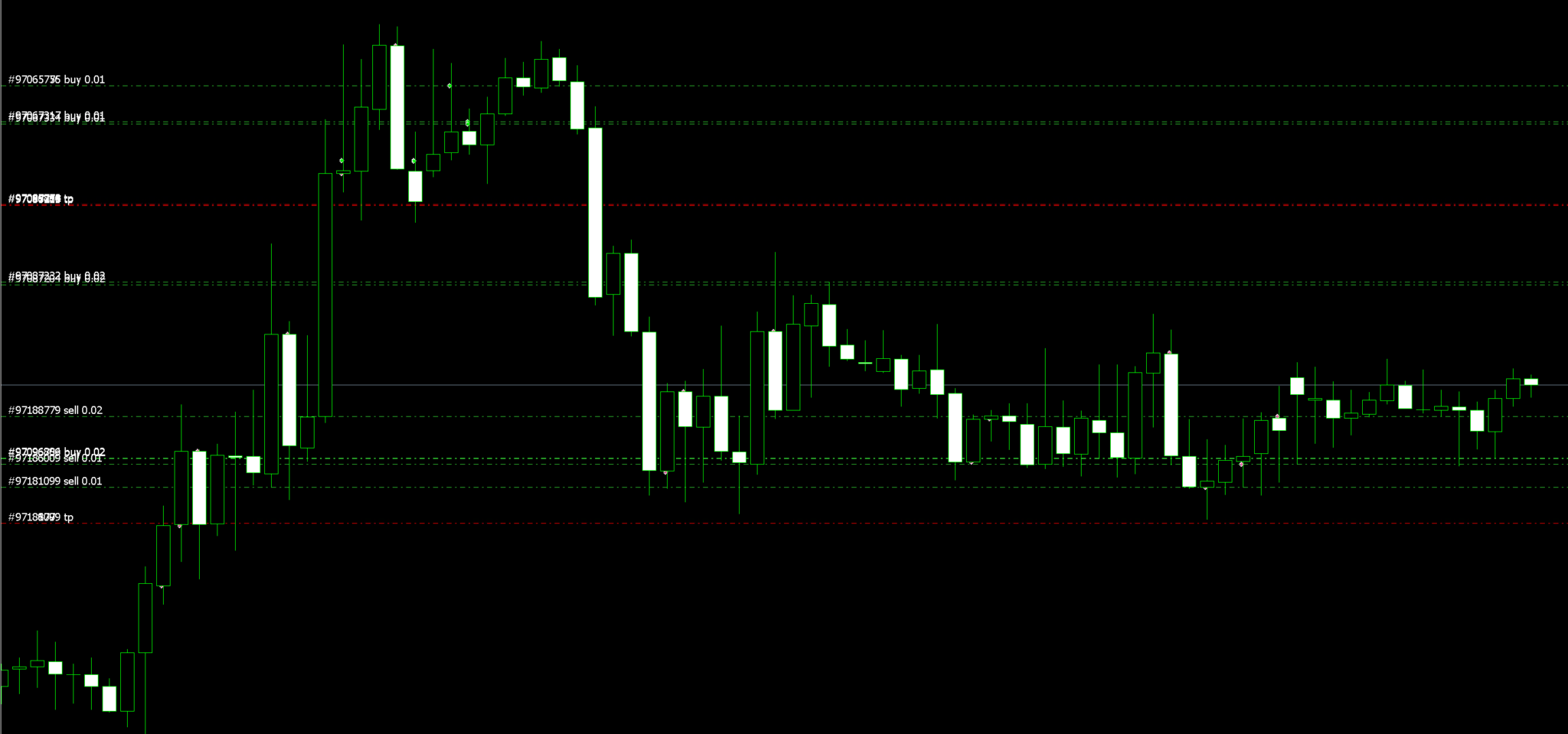
How to Use Hedging and its Limitations
Direct Hedging: Placing equal, opposite positions on the same currency pairs (buying and selling simultaneously). It is a bit complicated because of the spread costs and also involves tying up margin.
Correlation Hedging: Use different currency pairs that have negative correlations. A very thorough study and knowledge of market dynamics are required since, prac-tically, correlations do not hold forever.
The Risks of Hedging – It’s NOT a Guaranteed Safety Net
One aspect that is crucial is to understand that hedging does not eliminate risk; it shifts it. Here are some key risks:
Cost: Hedging consists of opening many different positions; this means paying the spread or commission on each one. In volatile markets, these costs can swallow up any profits that the strategy makes.
Locked Margin: The fact that you will be holding opposing positions means that you may have to chair away eligible margin, and you would, therefore, not be able to put on another trade.
Complexity: Managing hedged positions can be very complex in a fast-moving market. The positions need to be monitored almost constantly and quick decisions need to be made.
False Sense of Security: The worst part a bout hedging is that it gives you a false sense of security, thus making you, as a trader, become careless- and that would mean more significant losses if the market really went against your choices.
Understanding Floating Losses in Hedging
A critical aspect, when it comes to hedging, is to understand what floating losses are. This essentially means unrealized losses on an open position. In a hedged position, you will most probably have one side of it reporting a profit while the other will be the loser. The loss is considered floating since the moment you close the losing position is when it gets realized.
The Danger of Poorly Implemented Hedging – Potential for Catastrophe
Although hedging can be an effective risk management tool, it must be appreciated that negligible execution can result in disaster. This particularly happens when working with Expert Advisors (EAs) or automated systems. If the logic backing the hedging strategy is wrong or the EA does not incorporate the right programming, then the hedge runs the risk of multiplying losses rather than reducing them.
Here's why poorly applied hedging can be catastrophic:
Wrong Correlation Assumptions: If the hedge relies on assumed correlations that break down, both positions can lose simultaneously, doubling your losses.
Over-Hedging or Under-Hedging: Incorrect coincidence can further lead to either insufficient hedging (leaving you exposed to significant losses) or over-hedging (tying up excessive margin and limiting potential profits).
Timing Issues: Entering or exiting positions at the wrong time can lock in losses or miss out on potential profits.
Martingale or Grid Systems Combined with Hedging: Combining hedging with high-risk strategies like the Martingale or grid systems would be creating a very dangerous situation. In the event of a strong market move in one direction, the system may exponentially increase position trade volumes, leading to consequential account blow-up.
Conclusion
Hedging can be a very productive way of managing risks in forex trading, if applied properly. Yet again, it is not unconditional, and a wrong step in the implementation could lead to dire consequences. Therefore, it is very important to comprehend these risks well and manage the trades actively. In case EAs are used, then testing the EA very thoroughly and understanding its logic also becomes of prime importance.
Disclaimer: Forex trading carries a high level of risk and may not be suitable for all investors. The high degree of leverage can work against you as well as for you. Before deciding to trade forex, you should carefully consider your investment objectives, level of experience, and risk appetite. It is possible to lose some or all of your initial investment; therefore, you should not speculate with capital that you cannot afford to lose. The information provided in this article is for educational purposes only and should not be construed as investment advice.
admin
Writer at SP Traders Hub. Sharing insights on trading strategies, market analysis, and algorithmic trading.