
The Grid Trading Money Management Strategy in Forex
Grid Trading: If you’ve already picked your trades using your favourite strategy or algorithm, the next big question is: how do you manage your money well to protect your profits and limit losses? That’s where the Grid Money Management Strategy comes in. It’s a smart, easy-to-understand way to handle your trades once they’re open, helping you make the most of market moves without needing to guess the exact top or bottom.
In this article, I’ll explain how grid money management works, why it’s useful when combined with other strategies, and how you can use it safely to grow your forex account.
What Is Grid Money Management?
Grid Money Management is a way to manage an open trade by placing additional buy or sell orders at set price intervals around your initial position. After you pick your trade entry, this strategy helps you spread your risk and capture profits from small price moves without needing perfect timing.
Importantly, if the market moves against your trade and causes a loss, in grid money management you or the algo ads new orders in the same direction at lower prices (for buys) or higher prices (for sells). This “averages down” your position, reducing the overall entry price and helping you manage losses while waiting for the market to turn in your favor.
In short, it’s a step-by-step way to manage both profits and losses by building a “grid” of trades that work together to protect your account and maximize opportunities.
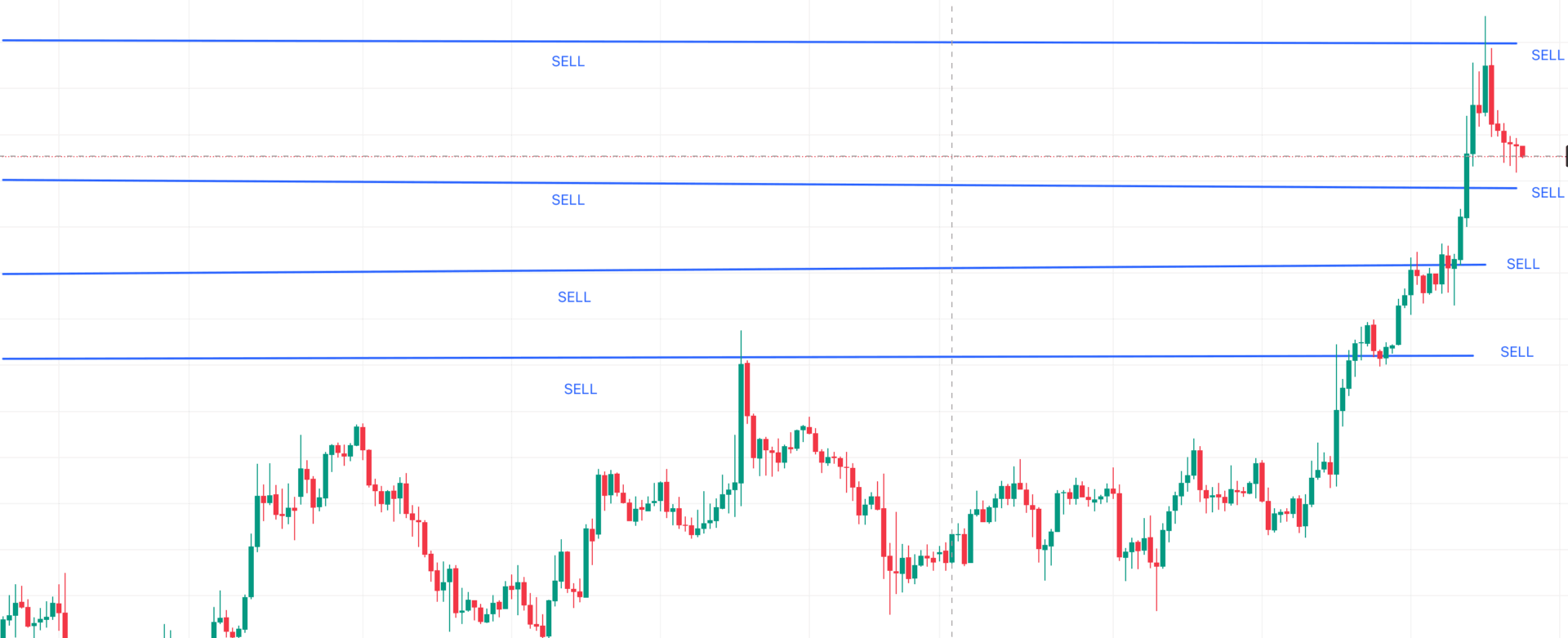
How Does Grid Money Management Work with Your Existing Trades?
Let’s say you already have a system that tells you when to enter trades — maybe a trend-following system or a technical indicator. Once you open a position, grid money management helps you manage that trade by adding new orders at set price intervals above and below your entry.
Here’s how it looks in practice:
Grid Spacing: You decide how far apart your orders are — for example, every 10 or 20 pips. This depends on how much the market usually moves.
Adding Orders: If the price moves down, you add buy orders below your initial trade. If it moves up, you add sell orders above. This way, you’re ready to profit from any bounce or pullback.
Lot Sizes: You control how big each order is. Smaller lots mean less risk; bigger lots mean bigger profits but more risk.
By doing this, you don’t have to guess the perfect moment to close your trade. Instead, you collect small profits as the price moves back and forth.
Different Ways to Manage Your Grid
There are a few popular ways to handle grid money management, each with its own style:
Hedging Grid: You open buy and sell orders at the same time to protect yourself if the market goes against you. It’s like having a backup plan but can tie up your money.
Martingale Grid: You increase your order size after a loss, hoping to recover losses with a bigger win. This can work but is risky because losses can grow fast.
Anti-Martingale Grid: You increase order size after a win, riding the wave of success while keeping losses smaller.
Each method has pros and cons, but the key is to pick one that fits your risk comfort and stick to it.
How to Manage Risk When Using Grid Money Management
Risk management is the heart of successful grid trading. Here’s how to keep your money safe:
Limit Your Grid Size: Don’t open too many orders at once. Set a max number to avoid big losses.
Use Stop-Losses: Even though grid trading can work without stop-losses, using them helps protect you in case the market moves strongly against you.
Choose Lot Sizes Carefully: Don’t go too big. Start small and increase only if you’re confident.
Adjust Grid Spacing: If the market is volatile, make your grid wider. If it’s calm, tighter spacing works better.
Tips to Make Grid Money Management Work for You
Pick the Right Currency Pairs: Go for pairs with steady movement and good liquidity, like EUR/USD or GBP/USD.
Avoid Trading During Big News: High-impact news can cause wild price swings that hurt grid trades.
Combine with Technical Tools: Use support and resistance levels or moving averages to set better grid points.
Use Automation: Expert Advisors (EAs) can help place and manage grid orders automatically, saving you time and reducing emotional mistakes but follow the next point carfully.
Avoid Big Trends: Do not trade grid EAs or your own strategy in a trend or against it. This is the mistake lots of people make and blow their accounts
Managing multiple orders manually can get confusing and stressful. That’s why many traders use automated tools, called Expert Advisors (EAs), to run their grid strategies. EAs follow your rules perfectly, placing orders, adjusting sizes, and closing trades without emotions. This helps keep your trading consistent and less stressful.
The Real Risks of Grid Money Management
No strategy is perfect. Grid trading can lead to:
Big Losses if the Market Trends Strongly: If the price keeps moving against your grid, losses can pile up.
Margin Calls: Too many open trades can use up your margin and force you to close positions at a loss.
Costs Add Up: Spreads and commissions can reduce your profits, especially with lots of trades.
The key is to manage your risk carefully and never risk more than you can afford to lose.
Grid money management is a powerful way to handle your trades after you’ve picked them. It helps you spread risk, catch profits from price swings, and work with your existing strategies. But remember, it’s not a magic bullet. Use it carefully, manage your risk, and consider automation to make your trading smoother.
Start small, test your grid on a demo account, and adjust as you learn. With patience and discipline, grid money management can become a valuable part of your forex trading toolbox.
admin
Writer at SP Traders Hub. Sharing insights on trading strategies, market analysis, and algorithmic trading.